

How To Get Rid Of Wild Onions In Your Yard
Wild Onion Control: How To Go Rid of Wild Onions
This page is an expert guide on getting rid of Wild Onion from your holding using the products and methods suggested past our experienced backyard care specialists. Follow this guide and use the recommended products and nosotros guarantee you will be successful in eliminating Wild Onion.
Garlic and onion may make corking additions in the kitchen if you lot are cooking some Italian food, but on your lawn? Not so much. Wild Onion (and the very similar Wild Garlic) are 2 pesky weeds that are definitely a sight for sore eyes--and thats without chopping and dicing them.
Wild onions (Allium canadense) are relatives to the varieties of garlic and onions we buy from the grocery store merely with a glaring difference; these wintertime perennials pitter-patter up usually where they are not wanted in flower beds or lawns.
Continue reading to learn more about Wild Onion and how you can remove it from you property using professional person lawn care products and advice by Solutions Pest & Lawn lawn care experts.
Identification
Earlier proceeding with control methods, it's important to first properly identify the plant to confirm whether it is Wild Onion. Misidentification tin can lead to using the wrong herbicides, which will be ineffective against the weed, costing you fourth dimension and money. Below are some identifying traits of Wild Onion.
- Wild onion (also known as Onion Grass) have white or faintly pinkish flowers that are star-shaped.
- They have long slender leaves that appear like thick grass blades and abound in tall clusters that can reach up to 2 feet long.
- Along with making your lawn look unsightly, Wild Onion comes with an equally off-putting odour.
- Wild Onion is often mistaken for Wild Garlic (and vice versa). The mode to tell the difference is by looking at their leaves. Wild garlic leaves are more than long, thin and hollow while Wild Onion has leaves that are flat, wide and long.
- Wild onions are invasive weeds that can reproduce themselves at an alarming rate. Wild Onion produces hole-and-corner bulbs and as well from seeds that are set from their blossoms which can potentially infest your lawn by popping up in more than than one spot.
Employ our clarification and paradigm above to help you to place Wild Onion on your backyard. If y'all are not totally sure and need assistance with identification, contact united states and we will properly ID the plant for yous as well as give you the best production recommendations to command your weed.
Inspection
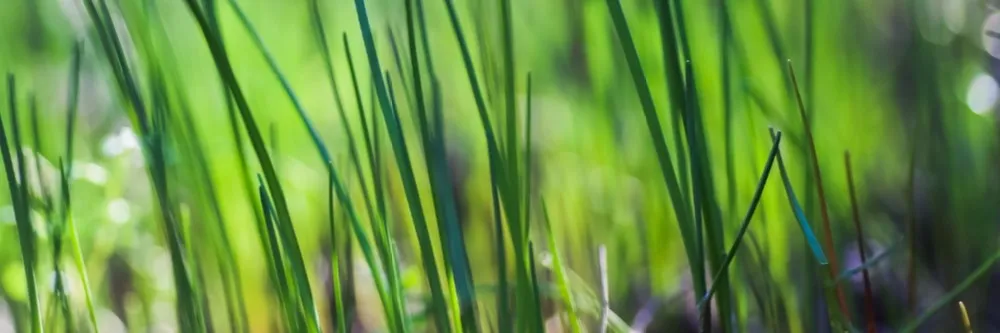
Subsequently you have confirmed that you are dealing with Wild Onion, you should move on to Inspection to pinpoint the areas where the weed is growing and the weather condition that is helping Wild Onion to thrive.
Where to Inspect
Wild Onions like to grow typically in bloom beds or areas of the backyard that are hard to mow. As mentioned in the description, they like to abound in clumps. Await for information technology in backyards, roadsides, sidewalks, and similar areas.
What To Look For
Look for thick grass blades that are waxy to the bear upon and give off a stiff onion smell.
Handling
When you take discovered where the Wild Onion is growing you may think to only pull them or mow them and the problem is solved, right? Wrong.
Different other weeds which can be simply controlled by chopping, pulling or spraying, Wild Onions aren't willing to go away without some resistance. Mowing over the weed or pulling it from the garden will not affect the bulbs beneath the soil, and within but a few days the bulbs will only bring forth new leaves.
Digging them out is a good option that is proven to piece of work simply could be a bit laborious, especially if you have a lot of them to deal with. The about effective way to eliminate them is via chemic command. Our elevation recommendation is 2,4-D Amine Selective Weed Killer.
Before handling or mixing whatsoever herbicide chemicals, please make sure you accept the proper personal protective equipment on in the form of gloves, a condom mask and protective eyewear.
Pace 1: Mix And Apply 2,four-D Amine
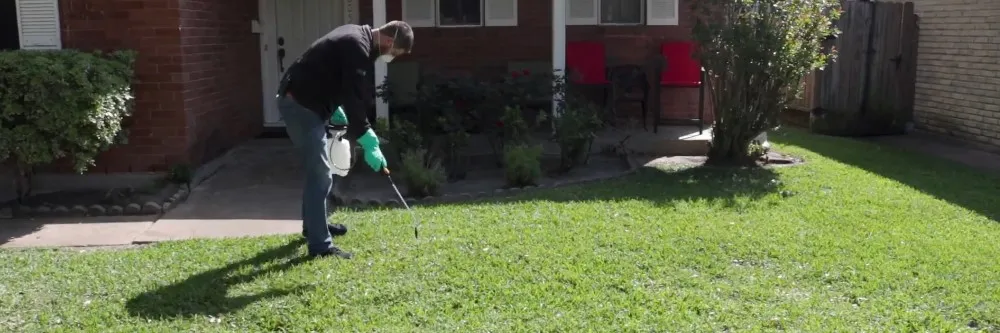
ii,4-D is an effective selective weed killer labeled to care for Wild Onion. Selective means that information technology volition but damage the target weed and not damage desired plants surrounding the weed.
Mensurate the square footage of the treatment area to make up one's mind how much 2,iv-D you will need. 2,four-D Amine should be mixed with a gallon of water at the rate of 0.75 to 1 fl. oz. (1-ane/2 to two Tablespoons) per 1,000 square anxiety. Mixing 2 four-D with a surfactant like Alligare ninety (at a rate of 0.33 fl. oz.) will help the product to stick ameliorate to the weed and make the herbicide work more than effectively.
For example, if y'all take a 2,000 sq. ft. area to treat, you volition need to mix i.5 to 2 fl. oz. in 2 gallons of water. One time you have made your measurements and calculated how much 2,4-D yous need, mix the product and surfactant with the appropriate amount of water in a handheld or backpack sprayer. Shake the sprayer to ensure the solution is well-mixed and and so you're set up to spray.
When applying, change the nozzle set to a fan nozzle so information technology will spray a fine mist on the plant and get an even coating on the Wild Onion.
Wild Onion should ideally be treated during early on fall to November and re-treated near the cease of winter into early on spring (Feb or early March) earlier these plants tin can produce the next generation of bulbs. However, be conscientious not to employ most weed killers onto centipedegrass or St. Augustinegrass during their spring green-upwardly period. Inspect the lawn again in the spring and the next autumn, and treat if necessary.
Prevention
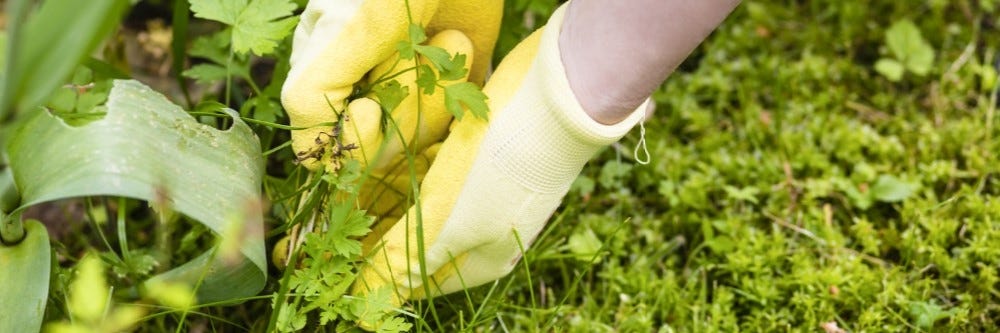
Once y'all accept eliminated Wild Onion from your lawn, you volition need to implement some preventative measures which ensure that this stinky weed doesn't brand a comeback.
Wild onions have thin leaves that can easily shed pre-emergent herbicides. They too have a waxy blanket which helps prevent absorption of the herbicide. With that being said, spraying the plants in one case will not practice the trick.
Treat the Wild Onion in November and reapply in March when Spring is in flower. Yous also may need to repeat this process for the next couple of years since Wild Onion bulbs tin stay dormant in the soil for up to half dozen years.
Key Takeaways
What is Wild Onion?
- Wild Onion (likewise called Onion Grass) is a common weed that grows on lawns and flowerbeds and has distinctive onion smell.
- Wild Onion looks similar to Wild Garlic with the chief difference existence that Wild Onion has wider, more than grass-like leaves, while Wild Garlic leaves are thin, tube-like and hollow.
How To Get Rid of Wild Onion In Your Yard
- To treat growing Wild Onion, we recommend applying ii,4-D Amine Selective Weed Killer. Treat the Wild Onion in the early fall to November with a follow-up treatment virtually the end of winter into early on spring (Feb or early on March).
Preventing Wild Onion Reinfestation
- Prevent Wild Onion past monitoring your backyard in the Autumn and early Leap for a few years and reapply 2,4-D periodically if you see young Wild Onion growing since the weed's bulbs tin can stay dormant in the soil up to half dozen years.

How To Get Rid Of Wild Onions In Your Yard,
Source: https://www.solutionsstores.com/how-to-control-and-eliminate-wild-onions
Posted by: osorioappithe.blogspot.com
0 Response to "How To Get Rid Of Wild Onions In Your Yard"
Post a Comment